
How air cargo leaders can reassess projects when assistance changes or arrives too late
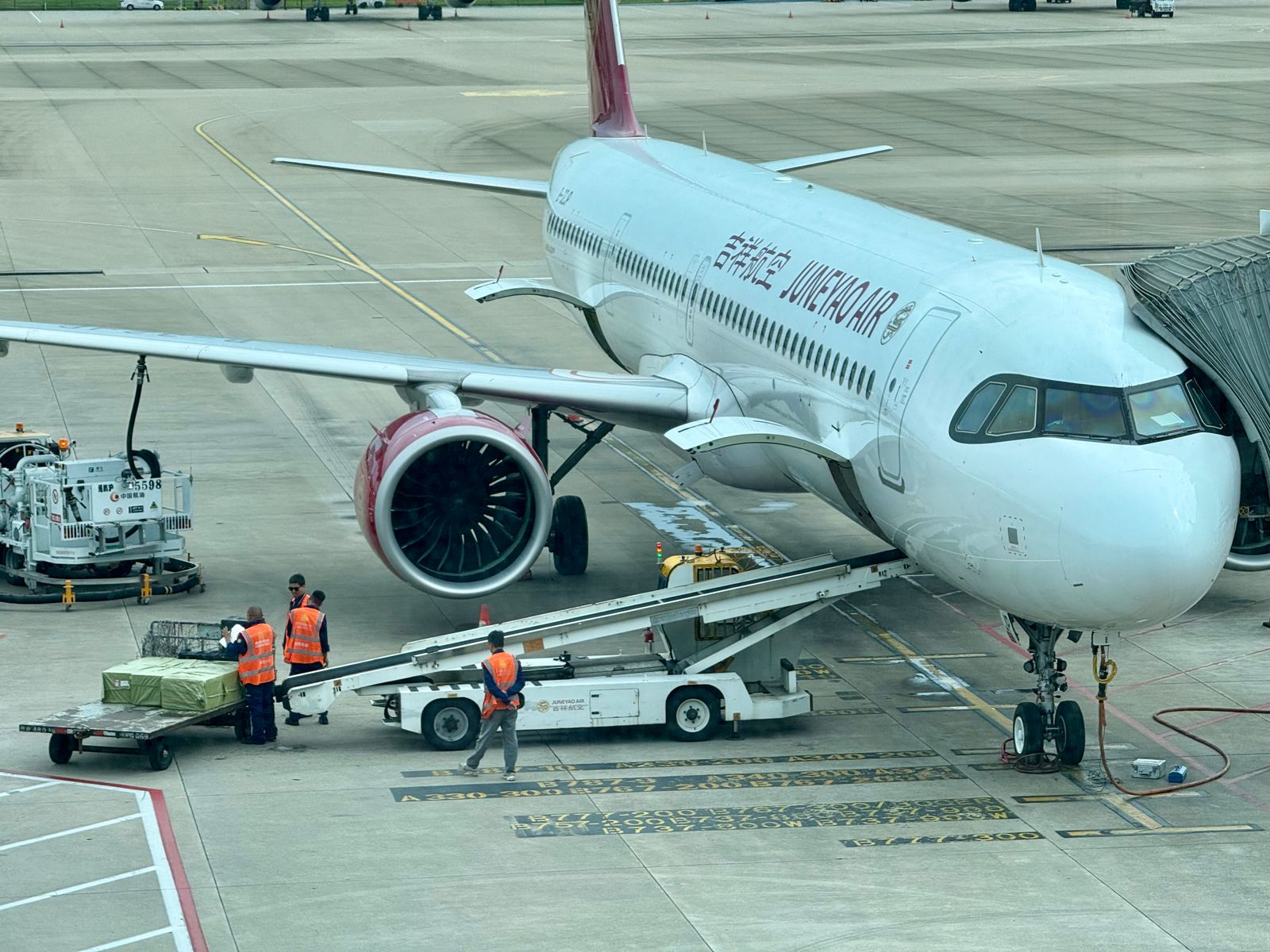
An equipment or infrastructure project can solve the right operating problem and still fail financially. The risk often sits between the assumed incentive and the date the organization must pay for equipment, finish electrical work, or place an asset in service.
For airports, handlers, forwarders, carriers, and their energy partners, the immediate task is to rebuild the project decision around current rules, executable schedules, and the cash required before assistance arrives. An anticipated grant, a qualifying tax credit, and a supplier discount belong in different lines of the model.
Some deadlines have already passed
The earlier article framed incentive expirations as a coming risk. That framing is no longer sufficient. IRS guidance identifies different triggers for different provisions: Section 45W excludes vehicles acquired after September 30, 2025; Section 30C excludes property placed in service after June 30, 2026; and Section 179D excludes property whose construction begins after June 30, 2026. An order date, acquisition date, construction start, and placed-in-service date are not interchangeable. [1]
A qualifying earlier acquisition may still matter for 45W, subject to all applicable requirements. Have the tax adviser review the actual contract, payment, delivery, and use records before preserving an assumed benefit. Do not represent a newly ordered asset as eligible merely because a similar asset qualified last year. [1]
The clean fuel production credit under Section 45Z follows a different path: the statute covers qualifying fuel sold through December 31, 2029. It is a production credit subject to conditions, not an automatic subsidy to an airline, forwarder, or airport buying fuel. Ask how any expected benefit affects the supplier’s price and who bears a later change in eligibility or credit value. [2]
| Project exposure | What must be established |
|---|---|
| Vehicle purchase | Actual acquisition timing and qualifying records; current treatment of the specific asset. |
| Charging or refueling installation | The applicable placed-in-service test, completion evidence, and the cost without the assumed credit. |
| Fuel supply agreement | Eligible producer and fuel; pricing formula; allocation of credit and change-in-law risk. |
| Grant-supported enabling work | Eligible applicant and cost; award terms; authority to incur costs; match and reimbursement timing. |
Separate the funding route from the operating need
FAA describes VALE as a route for eligible airport sponsors to finance specified air-quality improvements using AIP funds or passenger facility charges. Its airport and air-quality conditions are not universal. The Airport ZEV pilot also works through eligible airport sponsors and has specific vehicle and infrastructure rules. Neither description establishes that a private tenant can apply directly or that its full project will be funded. [3, 4]
Start with the sponsor and the FAA office before specifying the equipment. Identify the owner, beneficiary, applicant, eligible scope, and costs each party will retain. Get written direction on procurement and when costs may be incurred. Do the same for a state or utility offer; a program’s existence is not a reserved allocation, and an award announcement is not cash received.
A practical project record should classify each benefit as confirmed and documented, conditional, applied for, or being explored. Include the person responsible, next decision date, and evidence that would change its status. Keep uncertain assistance visible without treating it as committed money.
Test the decision without the assistance
Build three cases: documented assistance on the expected schedule; the same operating scope without unconfirmed assistance; and a delay or cost overrun tied to the actual weak point. Track both lifetime economics and the largest cash requirement. A reimbursable grant can improve the former while leaving the latter largely unchanged.
Consider a hypothetical $1.2 million equipment and enabling-work project with $150,000 in annual net operating savings. These are illustrative assumptions, not a cost benchmark, award forecast, or finding of eligibility.
| Illustrative case | Net capital cost | Simple payback |
|---|---|---|
| Documented $300,000 assistance | $900,000 | 6.0 years |
| No assistance | $1,200,000 | 8.0 years |
| No assistance plus $60,000 additional cost | $1,260,000 | 8.4 years |
Calculation: net capital cost divided by $150,000 in assumed annual net savings. The example excludes discounting, taxes, replacement, residual value, and changes in operating savings. It also excludes the operating benefit lost while commissioning is delayed. If the $300,000 is paid only after reimbursement, the organization may still need to finance the original $1.2 million before receipt. A full appraisal should model those cash flows by date.
If the decision changes when an unconfirmed award is removed, make that dependence explicit to the approving executive or board. Options include staging the project, retaining existing equipment longer, changing the lease arrangement, or waiting for a defined funding decision. Each has costs: extra maintenance, reduced flexibility, lost savings, or the risk that the necessary infrastructure is unavailable when equipment arrives.
Match the financial calendar to the operating calendar
Put utility service, switchgear, charger installation, equipment delivery, commissioning, staff training, lease rights, and funding milestones on one schedule. Identify the first point at which spending becomes difficult to recover. Avoid authorizing the full fleet order while the electrical work remains an unpriced assumption.
Define the latest useful decision date. If a funding decision slips beyond it, the team should know which smaller scope, interim arrangement, or cancellation route it will use. A deadline that exists only in a grant application does not protect the operating plan.
Use infrastructure evidence accurately
GAO’s July 2025 report is titled Air Cargo: DOT Should Communicate Data Limitations and Identify Stakeholder Challenges. It documented ground-infrastructure constraints through a nongeneralizable set of 37 stakeholder interviews across 11 airports. Those findings support investigating specific constraints; they do not establish that expiring incentives caused them. [5]
GAO’s current tracker still lists both recommendations as open. It records DOT progress reported in July 2026, including stakeholder engagement, while GAO continues its review. An anticipated agency completion date is not evidence that GAO closed a recommendation. [5]
Make the policy request specific
Organizations seeking policy changes should show the affected project stage, documented cost, service consequence, and remedy. That may mean clearer eligible-cost guidance, usable reimbursement terms, a workable transition rule, or coordination between infrastructure and equipment decisions. An association can aggregate recurring problems while preserving the distinction between verified project evidence and member estimates.
For policymakers, the useful test is whether assistance enables a needed, maintainable project without rewarding avoidable rushing or transferring an unmanageable obligation to the next owner. Predictability matters alongside eligibility, value for money, administrative burden, and measurable operating results.
Diakon Partners helps organizations connect those operational constraints with the relevant funding, regulatory, and stakeholder decisions. The objective is a project that remains workable when assumptions change.