
How to identify the constraint before committing the capital
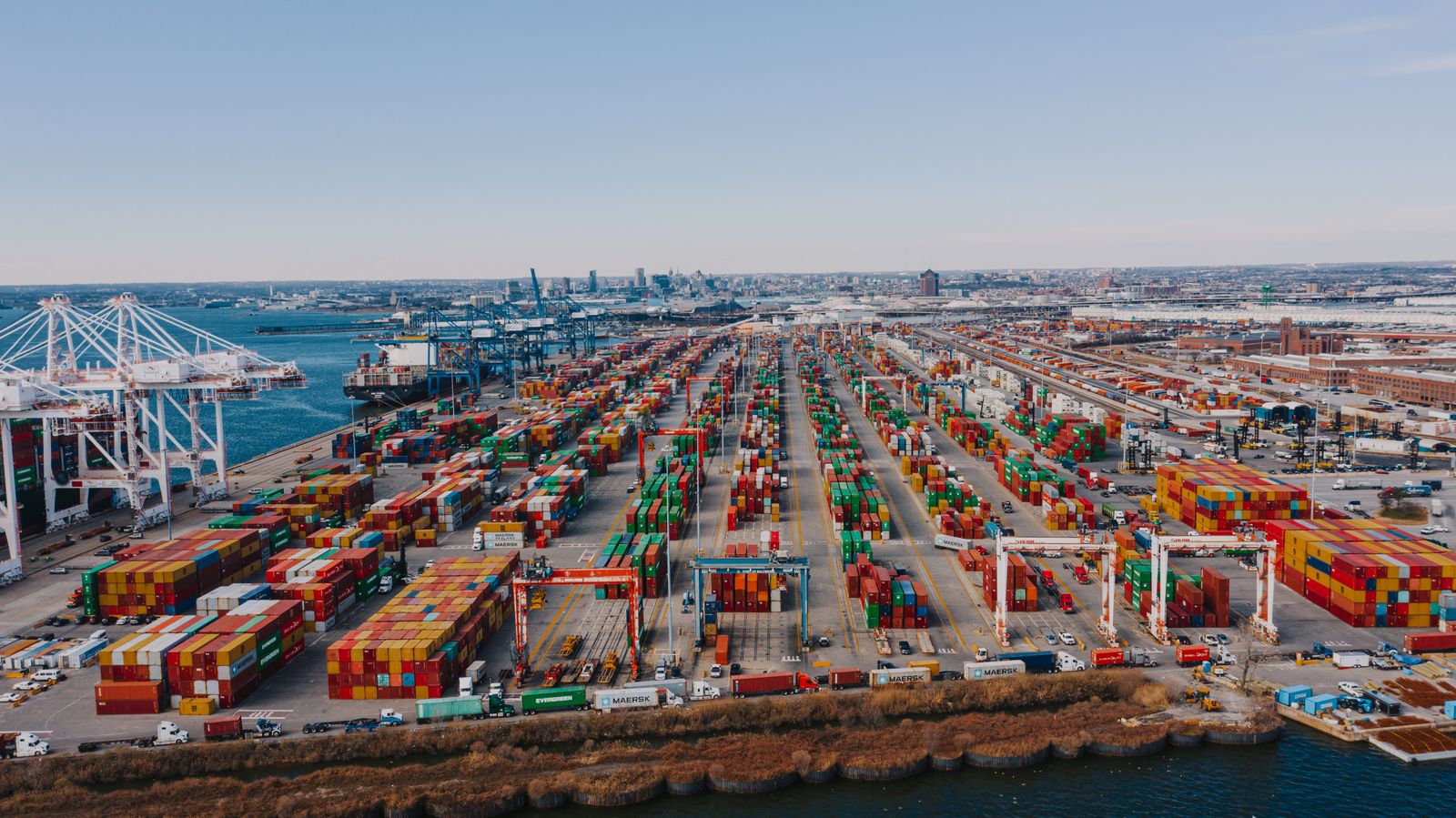
A berth expansion can add theoretical capacity while trucks still queue outside the gate. A new crane can move containers faster into a yard that cannot clear them. Port modernization delivers value when the whole cargo movement improves, including the handoffs that belong to other organizations.
For port authorities, terminal operators, carriers, manufacturers, and inland logistics providers, the first decision is which service failure needs to change. Define it before selecting the asset: an unreliable pickup, an unpredictable rail connection, unsafe truck circulation, or a vessel call the existing operation cannot handle.
Use dated evidence at the right scale
BTS’s 2026 port performance report states that ships carried $2.2 trillion, or 42.4 percent of the value of U.S. international freight trade, in 2024. This is a dated international-freight measure. It should not be substituted for total economic activity or described as a current count of jobs supported by ports. [1]
MARAD provides port-level vessel-call data with average, median, and maximum nominal containership capacity for 2017–2023. Nominal vessel capacity is not the cargo exchanged during a specific call. Use actual call size, arrival patterns, dwell, and inland capacity to decide whether a larger vessel is creating a local constraint. [2]
Find where the delay actually starts
Follow a representative shipment from vessel arrival through availability, release, pickup, and final inland transfer. Record queue time separately from work time. Compare a normal week, a surge, and a disrupted operating window. Look at the upper end of delay as well as the average, with the same definitions and observation period.
| Observed pattern | Question to resolve | First test |
|---|---|---|
| Vessel works quickly but yard dwell rises | Is release, pickup, or inland capacity constraining clearance? | Trace delayed units and the reason each remained. |
| Truck peaks coincide with gate queues | Is appointment capacity aligned with cargo availability? | Pilot a revised window with trucking and warehouse partners. |
| Equipment waits for power or maintenance | Is the asset available during the critical shift? | Measure downtime and confirm the enabling work. |
| A rail cutoff is regularly missed | Is the handoff or train plan creating the gap? | Agree the required release and transfer times. |
Compare an operating change with the capital alternative
Consider a hypothetical terminal where a pickup-window pilot reduces the longest truck queues without changing vessel handling. That result could justify improving appointments before adding gate lanes. It would not establish that a berth or channel project is unnecessary: those projects address different constraints. Track the pilot’s effect on driver schedules, warehouse receiving, staffing, and neighborhood traffic before scaling it.
For each alternative, compare total installed cost, disruption during construction, operating expense, maintenance, staffing, safety, and expected service performance. Include the “retain and maintain” option and a staged option. Make the conditions that would change the decision explicit.
Put the interfaces into the project agreement
Name the owner of every dependency: utility service, rail access, road authority, terminal system, carrier schedule, workforce training, and tenant equipment. Identify which commitments are binding, conditional, or still under discussion. A forecast of partner activity is not a commitment to provide it.
Require acceptance tests that reflect the intended service. A crane acceptance test and an end-to-end throughput test answer different questions. Define the equipment test with qualified technical staff, then separately test whether the yard, gate, staffing, and inland interfaces can use the capacity safely.
Make the public case measurable
For public agencies and associations, connect the investment to documented freight movement, safety, reliability, community effects, and the cost of alternatives. Use consistent boundaries when estimating jobs or economic effects. Avoid adding overlapping direct, indirect, and trade-dependent estimates as if they were distinct employment counts.
Review the actual grant notice, applicant rules, match, eligible costs, and conditions before treating public funding as available. A strong operational case still requires a suitable funding route and an affordable long-term maintenance obligation.
Diakon Partners helps organizations connect those operating needs with infrastructure, policy, and stakeholder decisions. The useful modernization measure is the cargo movement made more dependable, rather than the size of the asset installed.