
How to sequence power and fuel investments around a workable terminal operation
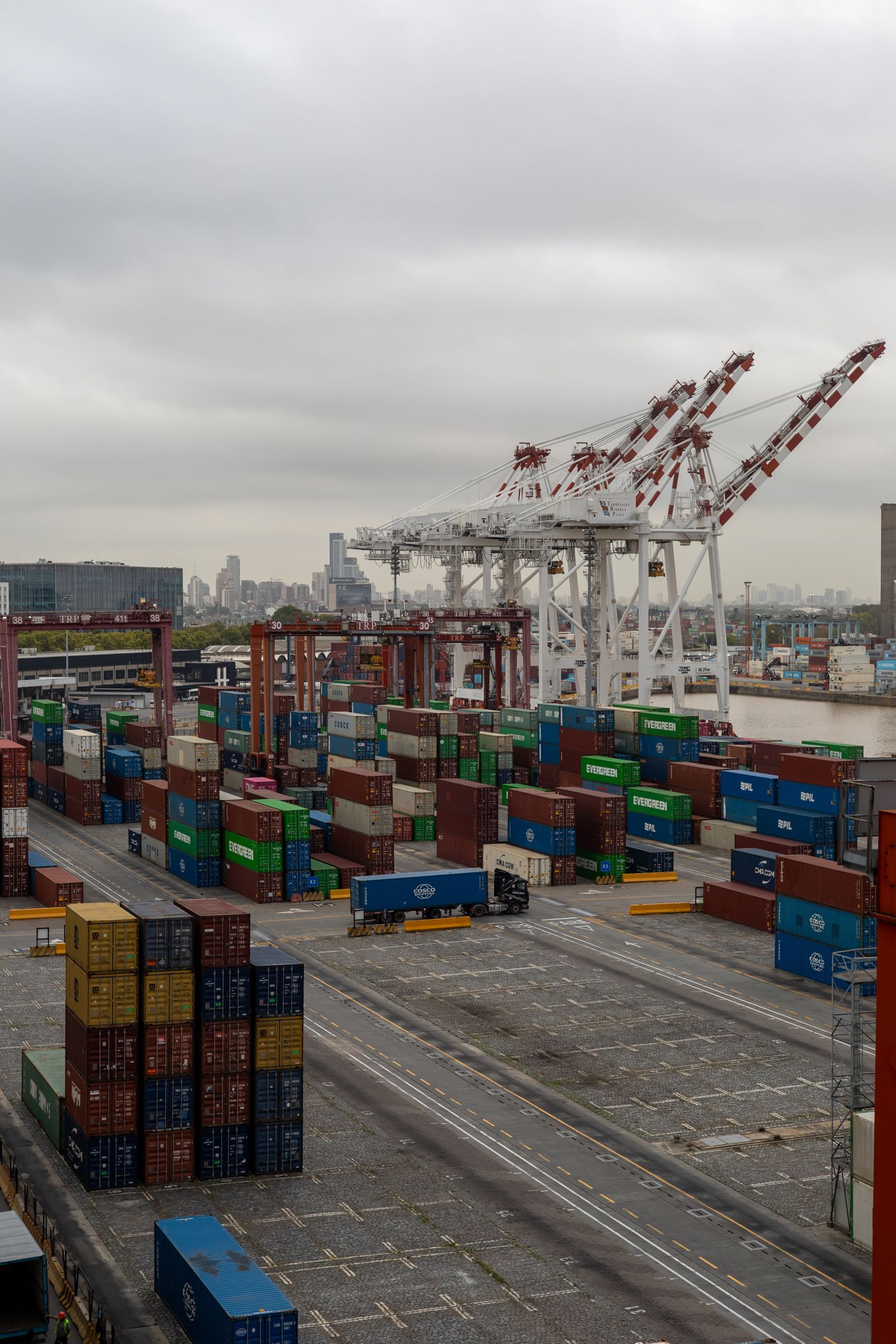
A terminal can buy suitable electric equipment before the electrical service needed to use it is ready. It can install shore-power capacity before enough compatible vessel calls exist to support the business case. The result is a stranded asset, an operational workaround, or a cost transferred to someone who did not plan for it.
Ports, tenants, vessel operators, trucking companies, utilities, and nearby communities need an energy plan tied to actual operating commitments. The task is to add capability without sacrificing throughput, safety, or the ability to recover from disruption.
Build separate demand cases
Cargo-handling equipment, drayage charging, vessel shore power, buildings, and fuel production have different demand profiles. A total annual energy estimate will not show whether they compete for the same electrical capacity during a busy vessel call.
A 2025 national-laboratory study provides modeled hourly cargo-handling-equipment load profiles for major U.S. container ports. The study describes an initial estimation method and limitations arising from port-specific equipment and operating patterns. It supports scenario planning; it does not establish that a particular terminal’s peak will double or triple. [1]
Separate committed near-term projects from contingent customer demand and longer-term options. Give each load an owner, location, duty cycle, earliest realistic commissioning date, and evidence of commitment. Do not combine all potential demand into a single inevitable forecast.
| Demand source | Dependency to confirm | Risk if sequenced poorly |
|---|---|---|
| Electric handling equipment | Charging windows, service capacity, readiness at dispatch | Equipment available on paper but not at the required shift. |
| Shore power | Vessel compatibility, connection time, berth use, electrical service | Low utilization or interference with cargo work. |
| Drayage charging | Dwell time, access, queue management, customer commitment | New truck queues or inadequate charging opportunity. |
| Alternative fuel supply | Actual vessel demand, delivery route, safety review, permits | Specialized infrastructure without dependable customers. |
Test the peak and the practical alternatives
In a hypothetical planning case, 40 chargers drawing 150 kilowatts each would add 6 megawatts if they operated simultaneously at that input. This is arithmetic, not an equipment recommendation or terminal forecast. A lower controlled peak may be possible if operating schedules permit it; verify vehicle readiness, charging losses, failed chargers, late arrivals, and the site’s other loads.
Compare managed charging, staged deployment, service upgrades, storage, and other suitable supply options. Evaluate whole-life cost and performance, not just the equipment price. A storage system’s power rating does not establish how long it will sustain a terminal; usable energy, reserve, recharge opportunity, and degradation also matter.
Resolve utility and commercial responsibilities
Confirm the utility study, connection scope, deposits, construction sequence, operating limits, and who pays for which assets. Additional electrical load service, generation interconnection, and permission to export are separate decisions. An initial utility discussion is not an approved service commitment.
For shared infrastructure, document allocation of capacity, priority during disruption, maintenance access, billing, downtime responsibility, and exit rights. Confirm that a port lease and its remaining term support the investment. If benefits depend on neighboring users, identify their actual commitments before sizing the shared system.
Do not confuse low emissions with outage capability
DOE notes that many solar systems disconnect when grid power is lost. A resilience objective requires an appropriate islanding design, controls, protection, and an operating resource able to support the specified loads. [2]
Define the service that must continue, acceptable interruption, duration, restoration sequence, and safe shutdown criteria. Test the handoff between IT, terminal equipment, gates, and electrical systems with qualified personnel. Protect workers from unsafe assumptions about equipment that may remain energized.
Treat fuel flexibility as a specific option
Different fuels impose different material, storage, safety, permitting, supply, and customer requirements. A fuel should not be described as interchangeable with another because both appear in a transition plan. Assess whether reserving land, corridors, or modular interfaces preserves a useful option at reasonable cost; avoid expensive speculative infrastructure without a decision trigger.
For policymakers, improve coordination among utility planning, transport infrastructure, permitting, and customer adoption. Require a clear account of who benefits, who pays, and how service will be maintained during construction. Tie assistance to a demonstrable bottleneck and measurable performance.
Diakon Partners helps organizations bring the infrastructure, operating, and policy decisions onto the same schedule. A credible plan gives each investment a customer, a dependency, and a point at which it should proceed or pause.