
How to protect shipments, qualify alternatives, and invest in the recovery capability customers actually need
Updated October 18, 2026
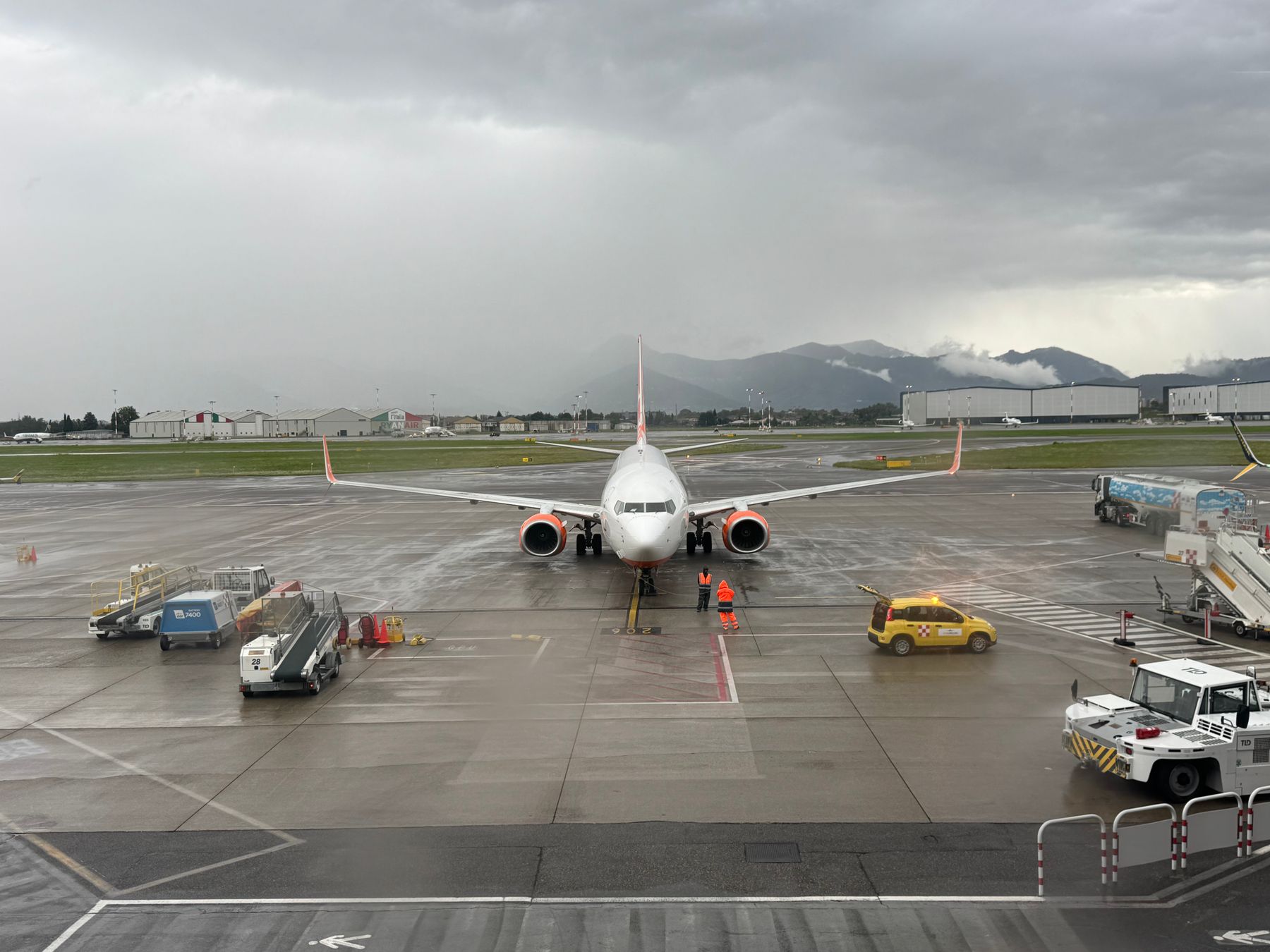
A flight can operate while the cargo service fails. Flooded access roads prevent tender. A power interruption disables a warehouse system. A storm clears, but the handling backlog consumes the next flight bank. For a manufacturer waiting on a production component or a shipper moving temperature-sensitive goods, the relevant measure is whether the shipment reaches its destination in usable condition and within the required window.
Climate resilience starts with that commitment. Forwarders, carriers, handlers, airports, and customers need to identify which weather exposures can break it, how long protection will last, and who can authorize a change before the recovery options disappear.
Before tendering an exposed shipment, confirm three things: how long its protection and delivery window remain viable, whether the alternate is executable, and the latest time to commit. If a critical dependency is unresolved, tell the customer while there is still time to choose.
Map the failure before buying the solution
Start with one consequential shipment flow. Trace pickup, road access, warehouse receipt, screening where applicable, storage, aircraft handoff, destination breakdown, and final delivery. Record the equipment, power, data connection, qualified people, and approvals each stage requires.
For flooding, examine access roads, docks, drainage, electrical equipment locations, and the route employees use to reach work. A dry runway is insufficient if trucks or staff cannot reach the cargo facility. For heat, ask the carrier whether the flight faces a payload restriction and ask the handler whether safe working arrangements change handling capacity. High temperature can impair aircraft performance; the operating carrier must determine the actual limit using applicable performance data. [5]
For thunderstorms, high winds, smoke, snow, or ice, use the airport’s and operator’s applicable procedures and current restrictions. Do not create a universal weather threshold for all airports or aircraft. A commercial deadline never overrides a safety stop.
Use recurring exposure in longer-term decisions as well. Before renewing a facility lease or selecting a gateway, examine the history of access failures, drainage, electrical equipment placement, backup capability, and recovery performance. For a long-lived asset, obtain location-specific engineering and hazard assessments over its intended life. A recent quiet season does not establish that the site is resilient.
Agree on triggers, authority, and a fallback
Create a short decision record for each exposed customer flow: the customer deadline, latest safe decision time, evidence that activates a response, named owner, authorized expenditure, and next update time. Use official warnings and restrictions alongside direct confirmation from the carrier, handler, warehouse, and road carrier.
A forecast is a reason to investigate and prepare. A confirmed closure, loss of required operating capability, or an approaching shipment-protection limit can require a hold or reroute. Name a backup decision-maker for nights and weekends. Record who may approve additional spending and who must approve a changed delivery commitment.
Calculate the latest decision time backward from the real constraint. Include vehicle mobilization, safe driving time, breaks where required, receiving hours, handling, required security or customs steps, and a contingency allowance. Do not assume an alternate remains available until the original airport closes.
Each customer update should state the confirmed operating facts, what remains conditional, the options and incremental costs, the decision required and its deadline, and the next update time. Name the person responsible. Distinguish a provisional arrival estimate from a confirmed delivery commitment; escalate before the customer’s last workable alternative expires.
Choose the response that preserves the commitment
| Option | When it can help | Tradeoff to check |
| Hold at origin | A qualified protected location can absorb the delay. | Consumes delivery slack and protection time; confirm release trigger. |
| Reroute | The full alternate chain is confirmed before the decision deadline. | Adds transport and handling; may share the original disruption. |
| Split the shipment | A usable partial quantity addresses the customer’s immediate need. | Adds cost, documentation, custody transfers, and reconciliation. |
| Revise the commitment | The customer can change production or receiving plans. | Requires explicit agreement; quantify the remaining business consequence. |
Diakon decision framework. Confirm safety, product condition, and applicable requirements before comparing commercial options.
The recovery decision card
| Commitment | Customer deadline and required condition |
| Trigger | Verified event or approaching protection limit |
| Decision time | Latest safe time to commit to the alternative |
| Owner | Named decision-maker and backup |
| Confirmed alternative | Space, access, acceptance, handling, release, delivery |
| Authority | Spending limit, customer approval, next update |
A realistic rerouting decision
Consider an illustrative export shipment of industrial components at an origin warehouse. Its customer needs delivery by noon Thursday. On Tuesday afternoon, the primary gateway faces possible access disruption. An alternate airport has a tentative Tuesday 10:00 p.m. tender cutoff. Assume four hours of safe road transit, one hour to mobilize the truck, and a one-hour allowance for variability before tender.
The latest dispatch is 5:00 p.m.; the decision to mobilize must therefore be made by 4:00 p.m. Those are planning assumptions, not a route recommendation. The actual route, lawful driving schedule, weather, and operator acceptance must support them.
Before authorizing the move, confirm booked space, commodity acceptance, receiving and handling coverage, applicable screening and customs arrangements, destination release, and delivery by the customer’s deadline. If any link remains unconfirmed, label the option conditional. A tentative cutoff and a flight schedule do not constitute an executable recovery plan.
Assume the alternate costs an additional $2,400 for transport, handling, and the fare difference. Present that incremental spending alongside the documented consequence of missing delivery and the likelihood of each option working. Do not equate invoice value with avoidable loss or count a speculative customer loss as a measured saving. If both options miss the deadline, discuss partial shipment, a changed production sequence, or a revised commitment with the customer.
Work backward from the cutoff
| 4:00 p.m. | Latest decision to mobilize the truck |
| 4:00–5:00 p.m. | 1 hour: vehicle mobilization |
| 5:00–9:00 p.m. | 4 hours: safe road transit |
| 9:00–10:00 p.m. | 1 hour: allowance for variability |
| 10:00 p.m. | Tentative tender cutoff; acceptance must be confirmed |
Illustrative Tuesday timeline. This ends at tender, not aircraft departure or customer delivery. Recalculate using the actual route, lawful driving schedule, handling requirements, and confirmed booking.
Test protection through the whole outage
A generator’s nameplate rating does not establish continuity. Have qualified facilities personnel identify which circuits it actually supplies: refrigeration, screening equipment, communications, lighting, doors, pumps, and charging may have different backup arrangements. Test transfer, actual load, monitoring, fuel access, maintenance support, and restart procedures safely.
For temperature-sensitive cargo, use the applicable product requirements and qualified packaging or storage arrangements. Verify remaining protection from actual preparation time and shipment history, including expected dwell and destination recovery. Never substitute a generic number of safe outage hours for a product-specific assessment.
Suppose a hypothetical qualified package has 18 hours of validated remaining protection, while transfer, transit, and destination receipt are expected to consume 13 hours. The five-hour planning margin can disappear if departure slips. Confirm that the validation applies to the expected conditions and set a decision point before the margin is exhausted. An excursion requires the authorized quality decision; an updated estimated arrival does not establish product acceptability.
Recognize patterns that weaken the fallback
Track repeated access failures during heavy rain, longer queues after ramp reopening, recurring backup-power alarms, and recovery times that grow even when flight cancellations do not. Investigate the mechanism before attributing every delay to weather. An information failure or staffing gap may explain why two operators recover differently from the same event.
Two airports can share a floodplain, road corridor, utility dependency, or storm track. They may also rely on the same handling workforce or transport provider. Ask whether the alternate removes the relevant failure or merely changes the airport code.
Forwarders should qualify the entire recovery chain. Carriers and handlers should distinguish reopening from restored throughput. Airports should coordinate with tenants, utilities, emergency managers, and road authorities. Manufacturers, retailers, life-sciences shippers, and technology companies should identify which deliveries actually warrant premium recovery and which can tolerate a planned delay.
Reopening is a new decision point. Before normal tender resumes, confirm the backlog by process, qualified staffing, equipment and power availability, receiving appointments, and the next flight bank’s handling capacity. Release held freight in agreed priorities rather than send the whole backlog at once. A cleared runway does not establish restored cargo throughput.
Is the alternate actually ready?
| Capacity | Booked space and commodity acceptance |
| Access | Safe truck route, driver availability, and receiving hours |
| Handling | Qualified coverage and applicable security arrangements |
| Destination | Release process and delivery within the customer window |
| Independence | Check shared weather, power, road, and provider dependencies |
| Authority | Named owner, spending approval, and customer agreement |
Any unresolved link keeps the option conditional. A schedule alone does not confirm recovery capability.
Prioritize investment by failure and customer consequence
Compare measures against the same defined failure: moving vulnerable equipment, improving drainage, adding a protected holding area, strengthening backup power, or contracting for alternate handling. Include design, permits, interruption during installation, maintenance, testing, fuel or energy, training, and replacement.
Start with changes that close a documented gap. A verified call tree and tested receiving arrangement may solve a coordination failure more quickly than a capital project. Conversely, a contact list cannot keep an unprotected cold room operating. Evaluate service impact and residual risk as well as cost.
Use scenarios when event probabilities are uncertain. Compare a short interruption, a prolonged closure, and a regional disruption. Show which customers remain exposed under each option. Do not promise a payback from an unsupported disaster probability or treat all cargo value as recoverable benefit.
What the evidence supports
NOAA identified 27 U.S. weather and climate disasters with losses exceeding $1 billion each in 2024. That is a national economic-loss measure, not a count of airport closures or a cargo-delay rate. NOAA retired this product with no updates beyond calendar year 2024; its archive remains available. Do not present the 2024 figure as the latest annual total from an ongoing NOAA series. [1–2]
More directly relevant to infrastructure, a 2023 GAO report found that 24 of 30 airports responding to its survey reported 321 unplanned power outages lasting at least five minutes during 2015–2022. This selected-airport evidence establishes a practical vulnerability; it does not show that every outage was weather-related or that outage frequency is rising nationally. [3]
Weather-delay statistics also need the right denominator. BTS separates extreme weather, weather within the National Aviation System, and late-arriving-aircraft effects. Its airline on-time reporting is not a shipment-level air cargo reliability measure. A flight-delay percentage cannot establish how often freight misses a customer deadline, and weather disruption alone does not attribute an event to climate change. [4]
Use dated public evidence alongside local incident records and site-specific assessment. Forecasts guide operating decisions; longer-term hazard assessments guide asset choices.
Keep the policy case specific
FAA’s Airport Improvement Program overview lists airfield drainage among typical eligible projects and explains that ordinary operating costs are generally ineligible. GAO has also documented federal support for certain airport electrical-resilience projects. These sources support examining particular projects; they do not establish a general grant entitlement for a private cargo warehouse or a currently open funding round. [3,6]
Before building a financing plan, confirm the current authority and program guidance, applicant and asset eligibility, project scope, federal and local shares, procurement and environmental requirements, and timing with the airport sponsor and responsible FAA office. A general program overview cannot resolve a particular award.
For policymakers, the useful request is a documented service problem and an eligible remedy: which critical cargo flow fails, what infrastructure or coordination gap causes it, who owns the asset, and what result the proposed investment would improve. Separate an existing obligation from a proposed policy change. Claims about tightening standards, new mandates, or expanding funding require an identified current source.
A practical 30–90-day review
In the first month, select the three customer flows with the greatest documented consequence of disruption. Map dependencies and decision times, identify protection limits, and verify one alternate for each. Give each unresolved dependency an owner and due date.
Next, run a tabletop exercise involving operations, facilities, customer service, finance, and the relevant partners. Test a night or weekend interruption and a regional event. Ask participants to demonstrate booking, receiving, quality approval where applicable, spending authority, and customer communication rather than simply confirm that a plan exists.
At the following review, decide which procedures to change, alternatives to contract, and capital projects to assess. These review intervals do not promise construction or approvals within 90 days.
Measure arrival within the customer’s agreed window, cargo-condition exceptions, time to authorize a recovery move, time to restore effective throughput, and incremental recovery spending. State the affected-shipment denominator and review mixed causes consistently. Compare equivalent events; fewer delays during a mild season do not prove the investment worked.
At the next management meeting, ask one practical question: if the primary gateway becomes unusable tonight, which customer commitments can we still meet, with what confirmed resources, and who makes the decision?
Diakon Partners helps businesses and associations connect operational exposure with infrastructure priorities, policy choices, and stakeholder coordination. A useful resilience strategy begins with a specific service commitment and a recovery plan that has been tested.
Sources and scope
Sources checked October 18, 2026. Historical figures retain their stated periods and scope. Recommendations are Diakon analysis. Both shipment examples are hypothetical planning scenarios, not client results, operating instructions, or validated product-protection specifications.
[1] NOAA NCEI, Assessing the U.S. Climate in 2024, January 10, 2025. Source
[2] NOAA NESDIS, retirement notice for Billion Dollar Weather and Climate Disasters, May 8, 2025. Source
[3] GAO-23-105203, Airport Infrastructure: Selected Airports’ Efforts to Enhance Electrical Resilience, 2023. Source
[4] BTS, Understanding the Reporting of Causes of Flight Delays and Cancellations, April 15, 2024. Source
[5] FAA, Aeronautical Information Manual, Potential Flight Hazards, density altitude discussion. Source
[6] FAA, Overview: What Is AIP & What Is Eligible? General program overview; verify current project-specific rules. Source