
Election 2026 · Congressional transition
Congressional Turnover: What Leaders Should Assess Now
Updated October 18, 2026 · Turnover comparison uses Pew’s September 14 snapshot
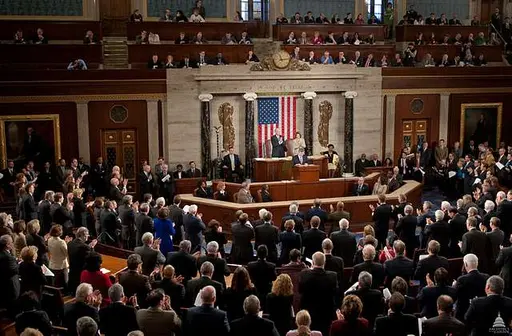
The next Congress is on track for unusually high turnover. For businesses, associations, and nonprofits, the consequences could extend well beyond introducing themselves to a new class of lawmakers. Departures can change the experience available to Congress, the continuity of support for legislation, and the paths through which organizations achieve policy results.
Organizations may enter January with the same policy priorities but a different set of decision-makers, less continuity of institutional knowledge, and new expectations about what government should deliver.
What the data show—and what they do not
The comparison below is a dated baseline, not a live October tally or a forecast of election results. Different trackers may include different types of departures; compare like definitions and reporting dates before interpreting a change.
Pew Research Center reported on September 16 that 74 House members would not return, based on its September 14 count. That is equivalent to approximately 17 percent of the House’s 435 seats, before additional general-election defeats. The total included 42 Republicans and 32 Democrats and was the highest preelection departure count since 1992. Comparable totals were 53 in 2024 and 66 in 2022. [1]
These figures measure departing incumbents, not a confirmed freshman class. Returning former members and contests between incumbents can affect the eventual number of first-time members. Nor does turnover by itself determine party control: outgoing members may be replaced by someone from the same party. [1]
Experience and support may need to be rebuilt
Congressional relationships often carry years of accumulated understanding: how an industry operates, why a statutory exception exists, or what made an earlier compromise possible. When members leave, organizations can lose both advocates and the institutional knowledge behind their support.
The departures reach into committee leadership. An April 16 analysis by the Brookings Institution identified three committee chairs and 18 subcommittee chairs among the retiring Republican members counted at that point. Its analysis also examined frustration with gridlock and limited opportunities to influence legislation as possible factors behind departures. [2]
The effects can extend beyond departing members. Committee assignments, staff responsibilities, and leadership roles may change, requiring organizations to reassess where relevant expertise and decision-making authority reside.
For organizations pursuing policy changes, earlier endorsements and negotiated language remain valuable. But successor offices and new committee leaders may need to examine those questions again. Support established in one Congress should not be assumed to transfer intact to the next.
The political setting changes the terms of engagement
The implications will depend on who wins and what incoming members believe voters sent them to accomplish. A large freshman class does not automatically mean greater moderation, more bipartisanship, or more willingness to legislate.
If the House is closely divided, small groups of members could exercise considerable influence over procedural votes, spending agreements, and legislative compromises. New members may lack seniority while still having bargaining power. Organizations will need to distinguish broad expressions of support from the support required to advance a measure.
A change in House control could also shift the balance between legislation and oversight. Under divided government, hearings and investigations may receive greater emphasis even when major bills struggle to advance. Organizations should be prepared to substantiate their practices and explain their public impact, as well as promote their proposals.
These are implications to assess as election results and congressional assignments develop, rather than predictions of a particular outcome.
Operational arguments need a clear public purpose
Proposals to modernize laws or simplify requirements can be technically sound and still fail to command attention. Their relevance becomes clearer when tied to outcomes constituents recognize: reliable services, lower costs, fair competition, worker protection, security, or accountable government.
The implications will vary by sector and by each organization’s overall priorities. Transportation, logistics, and service-dependent businesses may face changes involving infrastructure, trade, security, and regulatory efficiency. Manufacturing, energy, and technology organizations may encounter shifts in investment policy, permitting, workforce requirements, and emerging technology oversight. Trade and professional associations may need to sustain shared priorities across changing congressional relationships. Nonprofits and public-serving organizations may face changes in funding, oversight, and the attention given to their missions.
Those issues should be assessed against each organization’s broader goals, operating environment, and policy priorities. The practical question is where congressional change could affect the organization’s ability to operate, serve its stakeholders, or achieve its mission.
A broader strategy becomes more important
Congressional transition does not pause operating pressures. If federal action slows, states and agencies may continue making decisions, potentially creating different requirements across jurisdictions. Organizations need to account for those developments while pursuing legislation.
The task is to preserve the policy foundations already established, identify where support or expertise may be lost, and reassess the route to results. Clear evidence, workable proposals, and coalitions where they add value can help sustain that work across a transition.
What leaders should do before January
- Assess continuity. Identify departing policymakers and the knowledge, relationships, or policy support that may leave with them.
- Document prior progress. Preserve the reasoning behind proposals, technical agreements, and unresolved questions. Distinguish confirmed support from interest or conditional support.
- Refresh the public case. Explain the practical problem, who is affected, and what a workable solution would accomplish.
- Test the path to results. Identify what remains achievable before the current Congress ends, what may need to restart in January, and which priorities depend on legislation, funding, oversight, or agency action.
- Connect policy with organizational priorities. Determine which developments warrant attention based on operations, resources, service commitments, and mission.
A practical transition roadmap
Assign one accountable owner to each priority and keep a short transition record: the operating problem, decision needed, relevant jurisdiction, evidence, current supporters, unresolved objections, and next milestone. Record the date and conditions of any support. A meeting, an expression of interest, and a commitment to sponsor legislation are different stages.
- Before election results: identify where departures could interrupt a priority and preserve the legislative language, technical rationale, and stakeholder agreements already developed. Test any remaining opportunity against the actual calendar and decision required; do not assume the current Congress will finish it.
- After results are established: verify incoming offices and contact routes, prepare a concise briefing, and explain the constituent or operational impact. Label committee and leadership assignments as unconfirmed until announced.
- After congressional organization: confirm jurisdiction, leadership, and responsible staff; validate prior support with successor offices; and agree on a next action. Separate a legislative request from an appropriations, oversight, or agency request so it reaches the right decision-maker.
For example, a logistics organization seeking a statutory change should preserve its proposed language and shipment-level evidence; a technology company seeking clarity should distinguish a change in law from agency guidance; and a nonprofit dependent on federal funding should map its program’s authorizing and appropriations routes separately. These are planning examples, not predictions about particular offices.
Review progress against outcomes: a responsible staff contact confirmed, a technical question resolved, support reconfirmed, or a concrete next step agreed. Counting introductory meetings alone will not show whether the policy foundation survived the transition.
Prepare for the Transition
The election will determine who holds power. Congressional turnover will also help shape how that power is used.
Organizations should prepare for both: the political outcome and the institutional transition. That means understanding where experience may be lost, where priorities may change, and what evidence new decision-makers will need.
The objective is continuity of purpose, supported by a practical strategy for a changing Congress.
Sources
- Drew DeSilver, Pew Research Center, September 16, 2026. 2026 primary season yields greatest preelection House turnover in over 3 decades. Data as of September 14, 2026.
- Abby Ward and Molly E. Reynolds, Brookings Institution, April 16, 2026. House retirement wave signals deep institutional frustration.