
How to assess obligations and fuel choices without losing operational discipline
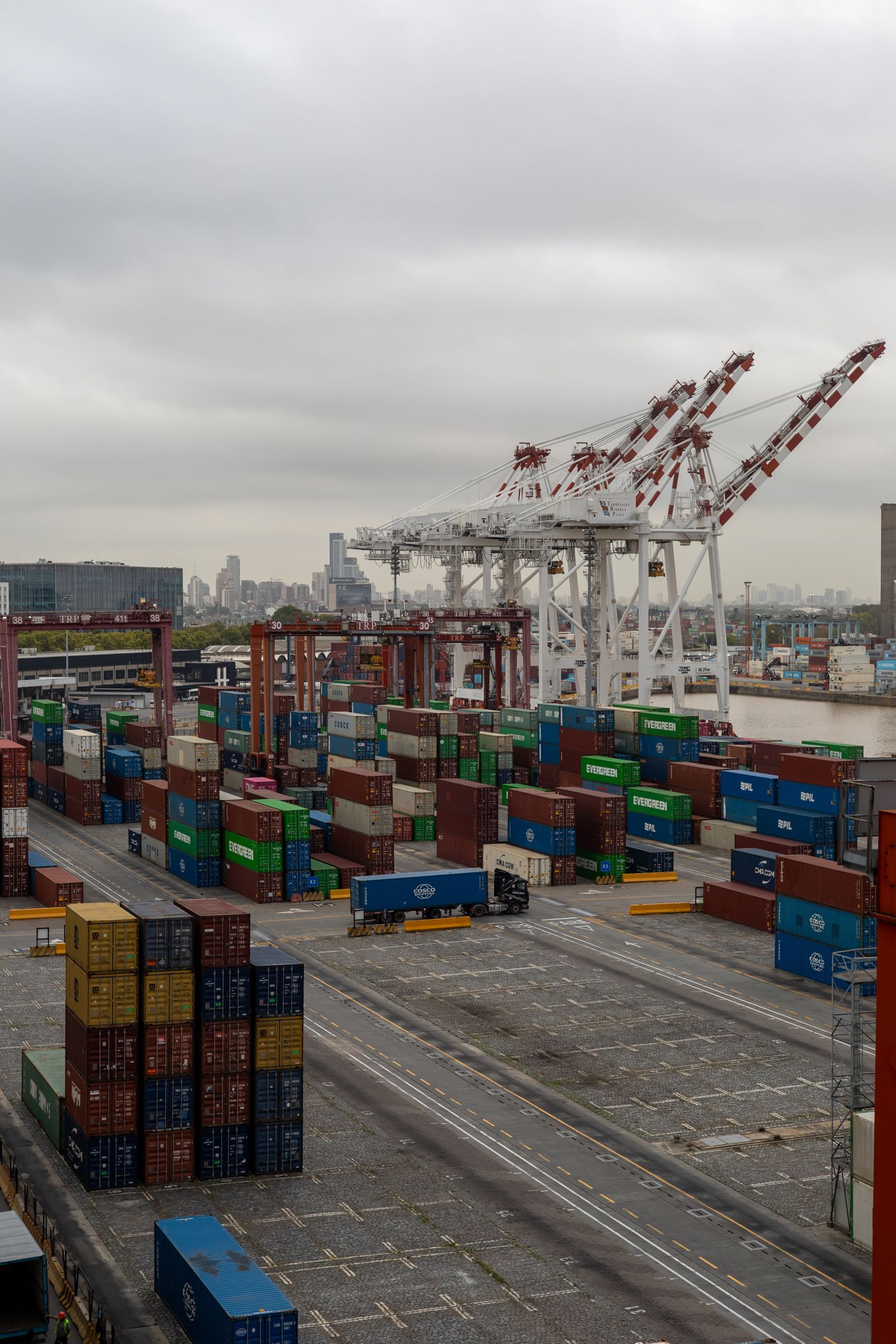
A shipping company can face an active regional fuel obligation while a proposed global framework remains unsettled. A port can face customer demand for shore power without a firm commitment to use it. Treating those different signals as one transition timetable leads to poor contracts and poorly sequenced investment.
For carriers, ports, terminals, manufacturers, and freight customers, the practical task is to identify the obligation or commercial requirement affecting the actual route, then compare workable ways to meet it.
Keep the emissions baseline and policy status precise
The Fourth IMO Greenhouse Gas Study estimated that total shipping accounted for 2.89 percent of global anthropogenic carbon dioxide emissions in 2018. That is a historical CO2 measure for total shipping, not a current estimate of international shipping’s share of all greenhouse gases. [1]
IMO’s September 2026 working-group summary still describes draft amendments for the Net-Zero Framework. It schedules further work for November and a resumed extraordinary session for December 4, subject to discussion at MEPC 85. Do not treat the draft framework or a previously expected implementation date as an enacted global obligation. [2]
FuelEU Maritime is different: the European Commission states that it has applied fully since January 1, 2025, apart from earlier monitoring-plan provisions. It sets lifecycle energy-intensity requirements for covered ships and voyages; applicability, exceptions, accounting, and verification need route-specific review. It is not a universal requirement to buy a named fuel. [3]
Build a route and contract exposure record
List the vessel, operator, ports, voyage pattern, applicable rules, reporting responsibility, fuel arrangements, and customer commitments. Separate regulatory liability from contractual cost allocation. A surcharge can transfer a cost without transferring the underlying compliance responsibility.
| Decision | Evidence needed | Commercial issue |
|---|---|---|
| Fuel purchase | Verified specification, eligible pathway, supply and delivery | Price formula, shortfall remedy, quality responsibility. |
| Vessel or engine commitment | Approved configuration, maintenance capability, intended duty | Conversion cost, utilization, resale and availability. |
| Port infrastructure | Compatible calls, power or fuel supply, permissions | Utilization commitment and allocation of shared costs. |
| Customer emissions claim | Method, boundary, chain of custody, assurance | Who may claim the benefit and how double counting is avoided. |
Compare lifecycle performance and service together
A fuel’s name does not establish its lifecycle emissions. Feedstock, production energy, transport, engine performance, and the applicable accounting method can change the result. Keep physical delivery, regulatory compliance, and voluntary customer claims distinct.
Compare the delivered cost of the service, not only the price per tonne of fuel. Include energy content, storage and handling, usable cargo space where affected, maintenance, port access, crew preparation, downtime, and backup supply. Confirm the assumptions with the relevant technical specialists.
Use staged decisions where demand is uncertain
Consider a hypothetical port serving a few potential alternative-fuel vessel calls. A customer’s expression of interest may justify a feasibility study or reserving a suitable site. It does not justify treating the full future volume as committed. A staged supply arrangement may preserve options while customer demand develops, provided safety and permitting requirements can be met.
Conversely, delaying a necessary capability can lose calls or leave the operator with a more expensive short-term compliance response. Make the cost of waiting explicit alongside the cost of early commitment. Set a decision trigger tied to contracted demand, verified supply, technical approvals, and financing.
Translate policy into an executable transition
Associations should distinguish common compliance difficulties from preferences for a particular fuel. Evidence about unavailable supply, inconsistent verification, or infrastructure timing supports a more useful policy discussion than a general call for certainty.
Policymakers should align implementation requirements, credible supply, verification, and infrastructure lead times while retaining accountability for the environmental result. Support should be assessed against lifecycle performance, cost, operational feasibility, and distribution of public benefits.
Diakon Partners helps organizations connect those regulatory and commercial questions to investment decisions. Competitiveness depends on meeting the applicable requirement while maintaining a dependable service and avoiding commitments built on an unverified scenario.